OTTAWA, Canada (PNN) - June 19, 2015 - The Canadian Senate’s Banking, Trade and Commerce (BTC) committee released its final report Friday asking the federal government to use a “light touch” in dealing with digital currencies.
Featured Video
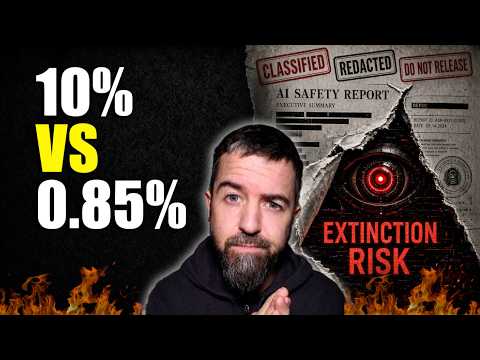 |
They just asked AI if it would end us; here is what they omittedArtificial intelligence is a technology that many executives of AI corporations are expressing concerns that the technology has the ability to destroy mankind. They have used AI to answer the question as to whether or not the technology could doom the human race. Superb video! Dan Dicks reports. |
Canadian Senate says no to regulating digital currencies
Submitted by Freedomman on Wed, 07/01/2015 - 19:51
Terrorist pig thug cops release “pre-crime” smart phone app
Submitted by Freedomman on Wed, 06/24/2015 - 21:56
AARGAU, Switzerland (PNN) - June 15, 2015 - Swiss terrorist pig thug cops have released a “pre-crime” smart phone app that warns users about crimes “before they are committed” based on criminal prediction software.
9-year-old builds tiny homes for the homeless
Submitted by Freedomman on Wed, 06/17/2015 - 21:58
She says everyone deserves a place to live.
BREMERTON, Washington (PNN) - June 9, 2015 - A nine-year-old girl from Bremerton, Washington, is positively impacting the lives of many in an incredibly unique and inspiring way.
When Hailey Fort was just 5 years old, she asked her mother if they could buy a homeless man a sandwich. Not a year had passed before Hailey began growing vegetables to donate to the local food bank.
When border patrol agents violate the rights of US residents
Submitted by Freedomman on Wed, 06/17/2015 - 21:53
ARIVACA, Arizona (PNN) - June 6, 2015 - It is a simple question that Carlota Wray has come to regard as an insult: “Are you a US citizen?”
For the record, the answer is yes. Wray has lived in the US (also known as the Fascist Police States of Amerika) for more than 30 years, is married to an Amerikan, and became a naturalized citizen about a decade ago. But she resents being quizzed about her immigration status - and is sometimes asked to prove it - when she leaves her home in the tiny Arizona border town of Arivaca for routine trips to neighboring places a couple of times a week.
Overstock to offer 25 million dollar corporate bond as the world’s first crypto security
Submitted by Freedomman on Thu, 06/11/2015 - 20:49
NEW YORK (PNN) - June 6, 2015 - On June 5, retail giant Overstock became the first company to offer a corporate bond, valued at US$25 million, as crypto securities to qualified institutional investors. The offering is part of the company’s bitcoin blockchain-based initiative called Medici.
Company launches mood-changing wearable that zaps brains
Submitted by Freedomman on Thu, 06/11/2015 - 20:46
LONDON, England (PNN) - June 2, 2015 - A newly-released headset hopes to wake people up or calm them down by manipulating the electricity in their brains.
Thync costs $299 and has just been released to the public. It provides “calm or energy on demand”, the company says, by using “neurosignalling” to activate nerves and change people’s states of mind.
Trendies ready for ultimate wearable chip implanted in their skin and used for payments
Submitted by Freedomman on Thu, 06/11/2015 - 20:06
SYDNEY, Australia (PNN) - June 1, 2015 - The Mark of the Beast is more almost here than ever before.
The likelihood of a forced RFID implant under the guise of a martial law pandemic emergency might be a little too obvious, as far as future tyranny goes.
Before it comes to that, it seems that plenty of people will be voluntarily subjecting themselves to cattle-like status, by jumping at the chance to ditch the inconvenience of a wallet and get a “smarter” payment system that can be embedded under their skin.
Facebook just made a move that will infuriate terrorist pig thug cops
Submitted by Freedomman on Thu, 06/11/2015 - 20:03
MENLO PARK, Kalifornia (PNN) - June 1, 2015 - Facebook has announced it is letting users add encryption keys to their profiles and opt in to have notification emails sent in an encrypted format.
The news comes as some Fascist Police States of Amerika surveillance powers expire and tensions rise between the FPSA government and the tech community over the use of strong encryption.
12 people arrested trying to enter their self-proclaimed country
Submitted by Freedomman on Thu, 06/11/2015 - 19:59
LIBERLAND (PNN) - May 20, 2015 - The denizens of Liberland, a self-proclaimed country whose official motto is “to live and let live,” have sure been getting into a lot of trouble lately.
The Free Republic of Liberland came into existence in April after Czech politician Vit Jedlička traveled to the disputed patch of land on the Serbian-Croatian border and raised a flag. Since then, Jedlička and his fellow activists have faced opposition, including arrest, from the neighboring countries.
How the digital age is really affecting our brains
Submitted by Freedomman on Thu, 06/11/2015 - 19:45
REDMOND, Washington (PNN) - May 19, 2015 - A comprehensive Microsoft study is offering insights into how living in the digital age is affecting our ability to sustain attention, and how our brains are adapting to the constant flow of new stimuli. Although the results confirmed the suspicions that the information overflow is affecting our ability to focus on one task for long periods of time, the news isn't all bad, as it seems we're also training our brains to multitask more effectively.

The #1 Freedom talk
show in the world!

“Politics is the science
of manipulating the truth.”
-- Brent Johnson

With Brent Johnson
Sunday
4:00-6:00 PM PST | 7:00-9:00 PM EST
THE HARD TRUTH

A Freedom Anthem

Navigation
User login


Recent blog posts


Most recent articles
- Paramount closes $81 billion Warner Bros. Discovery takeover
- A laser just photographed objects through six feet of concrete
- Commentary: Socialism is pure inefficiency
- Commentary: Eisenhower and Washington both spoke out against war
- Jersey Shore residents step up fight to keep Verizon 5G towers off beachfront!
- Commentary: What is really behind the AI panic
- Ancient underwater city discovered near resting place of Noah's Ark!
- Commentary: How war propaganda justifies conscription into unjust wars
- Massachusetts school district investigated over alleged secret gender transition!
- Artificial Intelligence wrongfully said she was guilty so moronic cops put her in jail
FEMA Camps


Patriot News Network
- Democrat gubernatorial candidate tells Obama to 'shove it'!
- NYPD thugs seek to ban gun ownership to bad drivers and those in debt!
- Security fears mount as e-voting comes of age!
- Audience recites Pledge of Allegiance over moderator objections!
- Nevada voting machines pose concerns about fraud!
- Shadow groups have spent nearly a quarter billion dollars on 2010 election!
- Backlash grows against full-body airport scanners!
- Social Security is running in the red!
- Movie trailer: “I Want Your Money!”
- Video: 9/11 report is a cover-up from start to finish!
Freedom Bumper Stickers